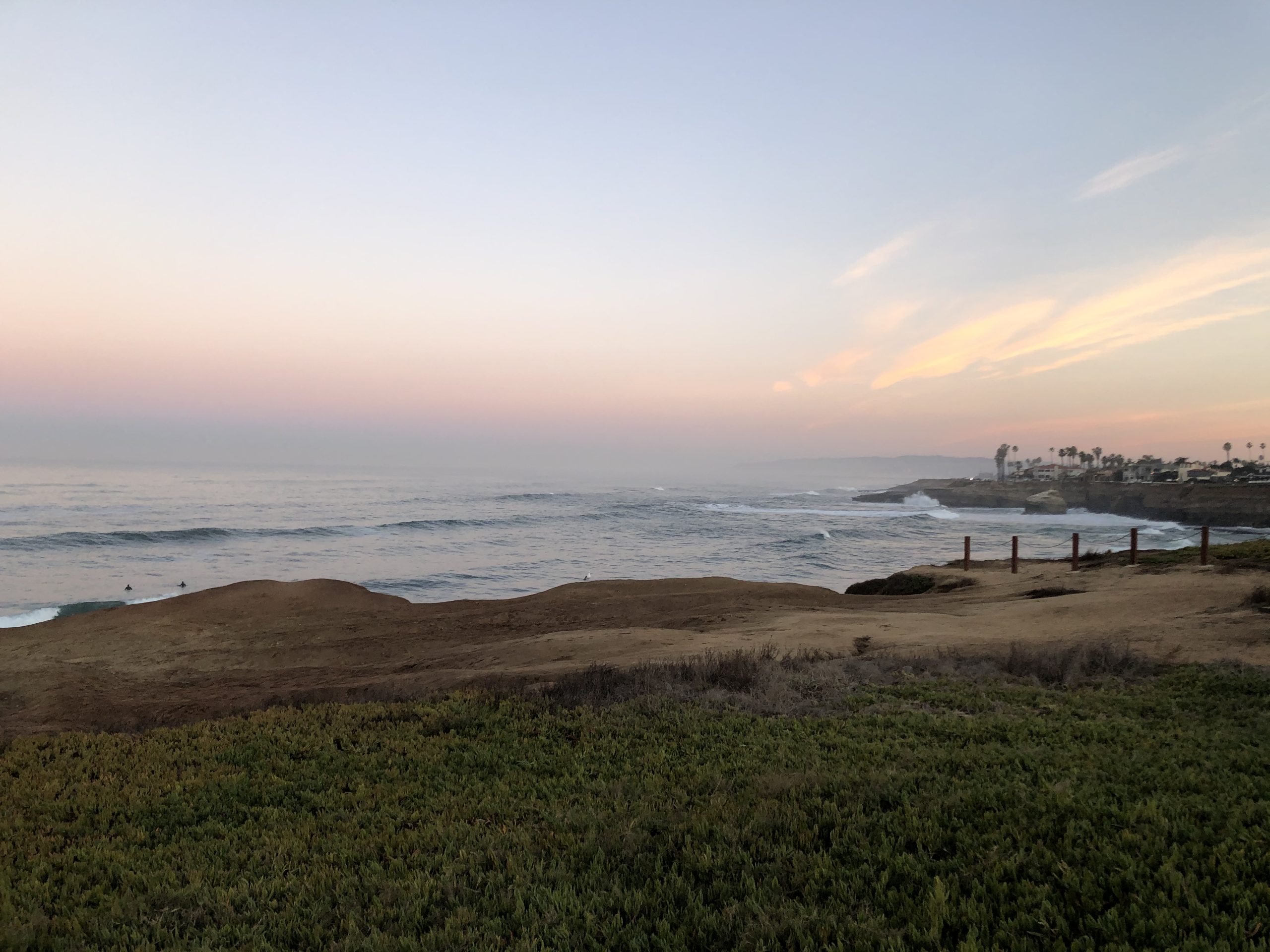
There’s a moment at Sunset Cliffs that gets everyone the first time. You park the car, walk maybe 30 seconds, and suddenly you’re standing at the edge of a sandstone bluff with the Pacific Ocean crashing into caves and arches 30 feet below you, the horizon stretching all the way to infinity, and absolutely nothing between you and Hawaii except open water. It stops people in their tracks every single time.
Sunset Cliffs Natural Park is a 68-acre stretch of coastline on the western edge of Point Loma, tucked between Ocean Beach and Cabrillo National Monument. It’s 1.5 miles of dramatic, wave-carved sandstone bluffs, sea caves, tide pools, and some of the most photographed scenery in San Diego. And the best part? It’s completely free. No permit, no entrance fee, no pass required. Just show up and walk.
Most people come here for the sunset — and yes, we’ll get into that — but there’s genuinely more going on at Sunset Cliffs than a pretty sky. There are trails in two completely different sections of the park with two completely different personalities. There’s beach access down stone staircases if you want to get below the cliffs. There are sea caves that open up at low tide. And there’s tide pooling that rivals anything else on the San Diego coast. Here’s the full breakdown.
Table of Contents
 Sunset Cliffs Natural Park — Fast Facts
- Location: Sunset Cliffs Boulevard, Point Loma (between Ocean Beach and Cabrillo NM)
- Hours: Open 24 hours, 365 days a year
- Entrance Fee: Free — always
- Parking: Free dirt lots and street parking along Sunset Cliffs Blvd
- Dogs: Allowed on leash on trails; beach access after 6 PM (Apr–Oct) and after 4 PM (Nov–Mar)
- Restrooms: Portable toilets on site — don’t count on them being in great shape
- Best time to visit: Low tide for caves and tide pools; 30–60 minutes before sunset for the views
Why Sunset Cliffs Is Worth Your Time (Even If You’ve Been Before)
Here’s the honest truth: a lot of San Diegans have been to Sunset Cliffs exactly once — they came for a sunset, stood at the railing, took the photo, and left. And while that’s a completely valid way to spend an evening here, it barely scratches the surface of what this park actually has to offer.
The geology here is genuinely remarkable. The sandstone bluffs have been sculpted by centuries of wave action into a wild variety of forms — arches, caves, overhangs, blowholes, and narrow slot canyons that the ocean has carved straight through the rock. At low tide, especially during a negative tide in winter, the exposed intertidal zone reveals a full marine ecosystem that’s as impressive as anything you’ll find at the more famous tide pool spots in the county.
There’s also the history. The cliffs were first developed in 1915 by real estate developer Albert Spalding — yes, the sporting goods magnate — who invested millions building viewing platforms, carved stone staircases, and even a saltwater swimming pool cut directly into the natural rock. A lot of that infrastructure is still visible today in the stairs and access paths. The city formally dedicated the area as a protected natural park in 1983, and that’s why it still looks like this instead of a condo development.
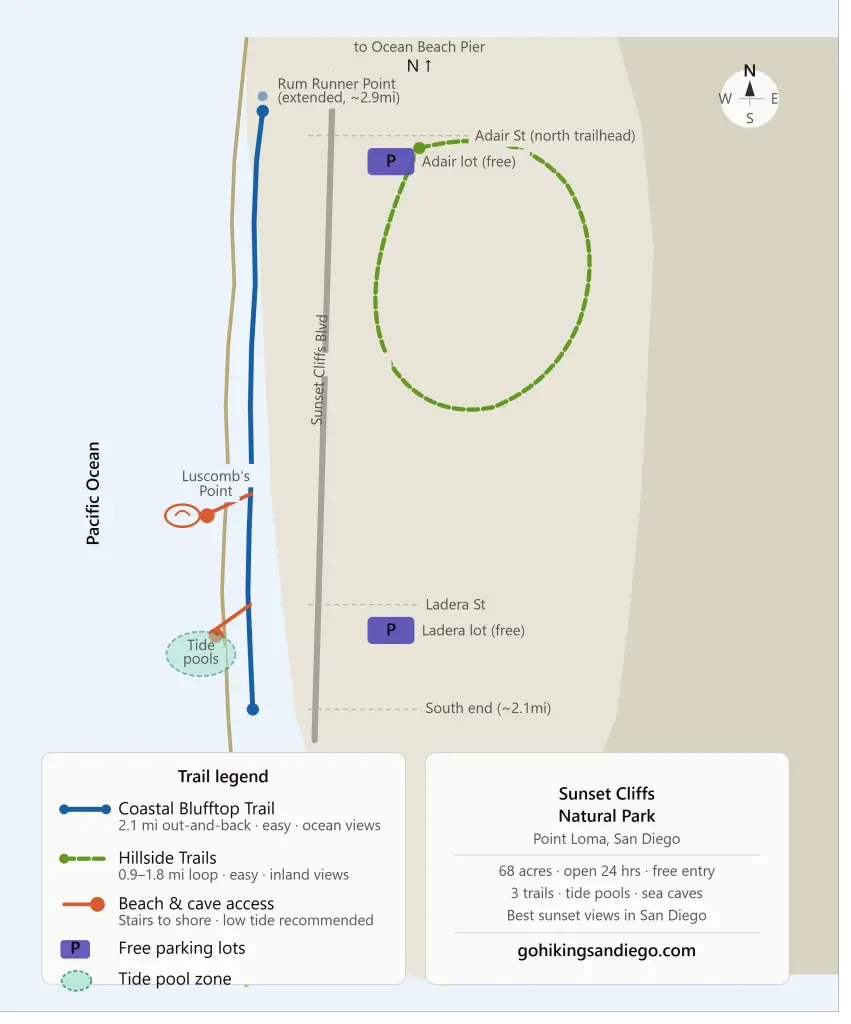
The park is split into two distinct sections that most visitors don’t realize both exist — the coastal blufftop corridor along Sunset Cliffs Boulevard, and a separate hillside section inland with a completely different trail character. Both are worth knowing about.
The Trails at Sunset Cliffs Natural Park
 Sunset Cliffs Coastal Trail (Main Blufftop Trail)
Distance: 2.1 miles out-and-back (or up to ~2.9 miles extended to Rum Runner Point) | Elevation Gain: ~78 ft | Difficulty: Easy | Time: 45 minutes–1.5 hours
This is the one. The main coastal trail runs along the blufftop parallel to Sunset Cliffs Boulevard, between Adair Street to the north and Ladera Street to the south, hugging the cliff edge with the ocean right there the whole time. It’s a hard-packed dirt path that’s wide enough to feel relaxed even when it’s busy — and on a nice evening near sunset, it will be busy.
The trail passes a constant stream of overlook points, benches, and cliff-edge viewpoints where you can stop and stare at the water below. The sandstone formations get more dramatic as you move south — arches and sea stacks visible from the blufftop, waves crashing into cave openings, surfers working the breaks at Luscomb’s Point. The trail is almost entirely flat with only gentle undulation, which makes it one of the most accessible coastal walks in San Diego — families, strollers, runners, dogs (during allowed hours), everyone uses this path.
If you want to extend the walk, continue north past Adair Street toward Rum Runner Point, bringing the total to about 2.9 miles. The trail becomes less defined past the park’s official boundaries, but the views continue and the crowds thin noticeably.
Best starting point: The free dirt parking lot at the corner of Ladera Street and Cornish Drive puts you at the southern end of the trail, right near the staircase access and some of the most dramatic cliff formations. Alternatively, start at the northern lot near Adair Street and walk south — the views just keep getting better.
 Hillside Trails (The Other Section Most People Miss)
Distance: 0.9–1.8 miles (various loops and connectors) | Elevation Gain: ~154 ft | Difficulty: Easy | Time: 20–45 minutes
Here’s the section that catches most people off guard: on the inland (east) side of Sunset Cliffs Boulevard, there’s a completely separate trail network winding through the hillside portion of the park. While the coastal trail is all ocean views and dramatic bluffs, the hillside section feels like a different park entirely — native coastal sage scrub, quieter trails, and elevated views looking both inland and back out to the sea.
The main loop in this section is the Sunset Cliffs Short Loop at about 0.9 miles, making a circuit through the northeast end of the park. It’s a great option if the coastal trail feels too crowded or you want to add on mileage after the blufftop walk. The coastal scrub vegetation up here is part of what makes the park ecologically significant — it connects to the Point Loma Ecological Reserve and supports native plant communities that are increasingly rare along the San Diego coast.
There are multiple trail connectors in this section, so you can extend the hillside walk to 1.8 miles or more by linking routes. The signage isn’t always perfect, so download the trail map from AllTrails or the City of San Diego parks page before you head out if you want to navigate this section with confidence. Note that some trails in the hillside section are closed for revegetation — stay on the established paths and respect the closure signs. This park is actively managed and the native plants are coming back.
 Beach & Cave Access (The Low Tide Adventure)
Distance: Varies — short steep descents to the shoreline | Difficulty: Moderate (steep stairs/scrambling) | Best conditions: Low tide or negative tide only
The third way to experience Sunset Cliffs doesn’t involve a trail at all — it involves going down. There are several access points along the coastal trail where staircases and steep paths descend from the blufftop to the rocky shoreline below, and at low tide these open up a completely different world.
The Ladera Street Stairs are the most accessible beach entry point — a staircase at the intersection of Ladera Street and Sunset Cliffs Boulevard that drops you directly onto the rocky beach. From the bottom, turn left and you’re immediately in tide pool territory. At low tide, the intertidal zone here is loaded: hermit crabs, barnacles, sea anemones, urchins, limpets, the occasional sea star. The pools are part of the protected coastal environment, so the same rules apply as everywhere — look, don’t touch, don’t take anything.
Luscomb’s Point, further south, is where things get more adventurous. A steep, sometimes slippery path descends from the blufftop near the point. At the bottom, the rock shelf extends out toward an open-ceiling sea cave — one of the best accessible sea caves on the San Diego coast. The cave has a natural skylight cut through the top of the cliff above it, and when the swells push in, the water surges through in a way that’s both dramatic and a good reminder not to get too close to the edge. This one requires a negative tide (when the water level drops below sea level) to access safely — check the NOAA tide charts before you go and aim to be there within a couple hours of the lowest point of the day.
Cliff and Beach Safety: The sandstone at Sunset Cliffs is actively eroding — sections that looked stable last year may not be this year. Stay on established paths, stay back from unprotected cliff edges, and never sit on the edge of the bluffs no matter how good the photo op looks. On the beach, always check the tide before you descend — the rocks can become inaccessible quickly as the tide comes in, and the surf can surge unexpectedly even on calm-looking days. Watch the water, not just the horizon.
Parking: Free, Straightforward, and First Come First Served
One of the best things about Sunset Cliffs is that parking is free — and there’s genuinely a fair amount of it. The catch is that it fills up fast during the golden hour window before sunset and on weekend afternoons. Here’s where to park:
Ladera Street Dirt Lot (best for the coastal trail and beach access): The main free dirt lot sits at the corner of Ladera Street and Cornish Drive, right at the southern end of the park. It’s the most popular lot and fills up first. Aim to arrive at least 45 minutes before sunset on weekends if you want this spot.
Adair Street Area (northern end): There’s additional free parking near the northern end of the park along Sunset Cliffs Boulevard near Adair Street. This lot is less well-known and often has spots when Ladera is full. Good option if you’re planning to walk the full coastal trail south.
Point Loma Nazarene University (PLNU): The university’s lot off Lomaland Drive sometimes allows visitor parking. It’s worth checking as a backup, but availability varies — look for signage and don’t park where you’re not supposed to.
Street parking along Sunset Cliffs Boulevard: Free street parking runs the length of the park along the boulevard. On weekdays and weekend mornings, this is easy. On a Saturday at 6:30 PM in summer? You may need to circle a few times or park a block or two into the residential streets east of the boulevard and walk in. It’s rarely more than a five-minute walk from anywhere you park, so don’t stress too much about finding the closest spot.
The play for sunset crowds: Arrive early. If a 7:30 PM sunset is on the schedule, be parked by 6:45 at the latest. Alternatively, come back on a weekday evening — the difference in crowd size between a Saturday sunset and a Tuesday sunset at Sunset Cliffs is genuinely significant, and the experience is much better when you’re not shoulder to shoulder.
Sunset Tips: How to Actually Make the Most of It
This is probably the number one thing people come here for, so let’s do it right.
Check the sunset time before you go. Sunset times in San Diego range from around 4:45 PM in December to 8:00 PM in late June — a massive swing that catches people off guard. Showing up at 6 PM in December means you’ve missed it. Google “sunset time San Diego today” takes three seconds and makes the whole thing work.
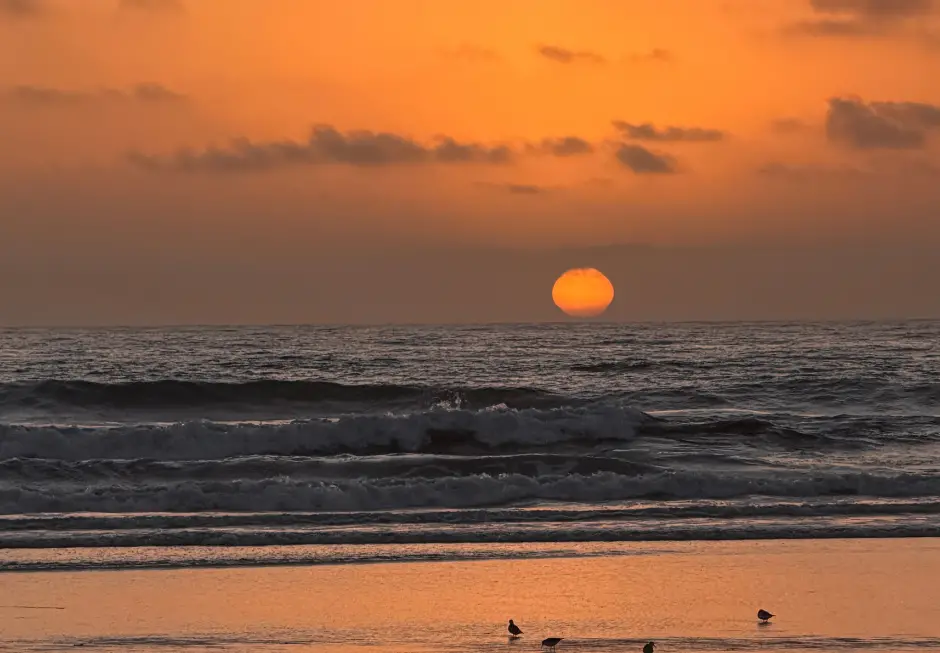
The 30 minutes before sunset is the show. This is when the light turns golden, the cliffs pick up warm tones, and the whole scene gets cinematic. But stay after. The 10–15 minutes after the sun drops below the horizon — what photographers call the “blue hour” — often produces the most intense color in the sky. Deep oranges, pinks, and purples spread across the upper atmosphere after the sun is gone. A lot of people leave right when it gets best. Don’t be those people.
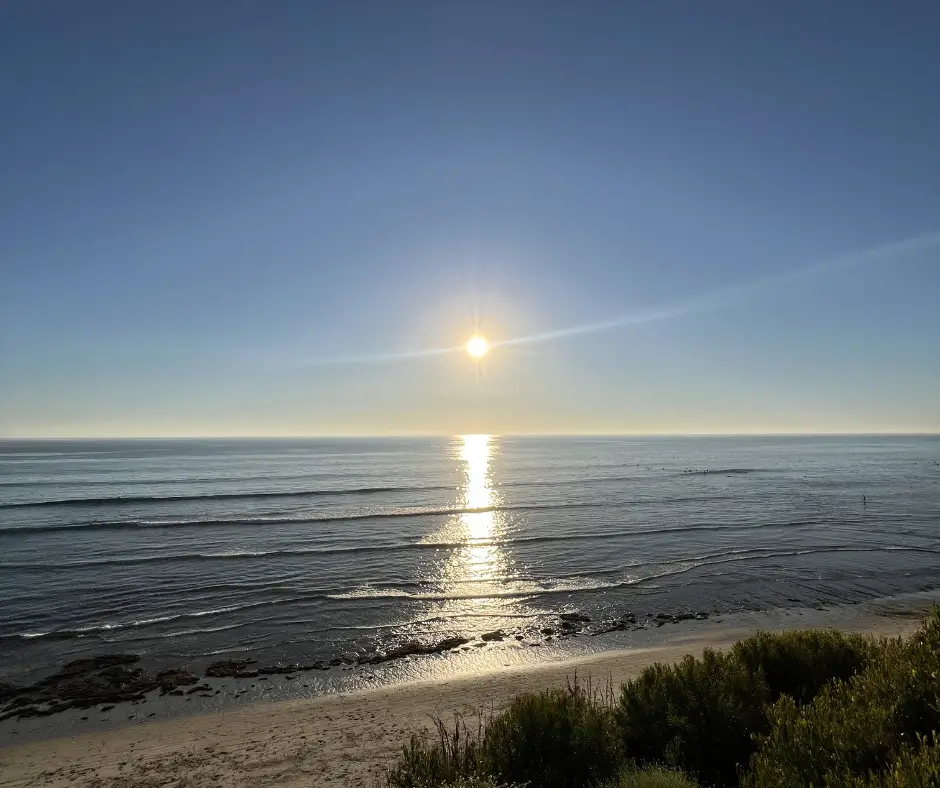
Face west, but also look east. Everyone stares at the ocean during a sunset. Flip around and look east occasionally — the light bouncing off the hillside and the clouds above the city can be just as stunning as the ocean horizon, and it’s dramatically less photographed.
Winter sunsets are underrated. Summer sunsets get all the attention, but winter at Sunset Cliffs is genuinely spectacular — storm clouds coming off the Pacific catch the light in ways that clear-sky summer sunsets just can’t match. A dramatic December sunset after a storm system passes through is one of the best things San Diego has to offer.
Find your spot early. The best overlook points along the coastal trail fill up with people laying out blankets, setting up tripods, and staking their territory a good 20–30 minutes before sunset on weekends. If a specific overlook is on your list, be there first.
Marine layer warning: May Gray and June Gloom are real. The coastal fog that blankets San Diego’s coast in late spring and early summer rolls in thick by afternoon and can completely obscure the sunset. Check the marine layer forecast if you’re planning a specific trip for the sunset — it’ll save you the disappointment of watching a wall of gray do absolutely nothing.
A Few More Things to Know
This is one of the best whale watching spots on the San Diego coast. From December through April, gray whales migrate past Point Loma on their way between Alaska and Baja California. The coastal trail’s cliff overlooks give you an elevated angle that makes spotting spouts and flukes much easier than beach level. Bring binoculars. Mid-January is the peak of the southbound migration.
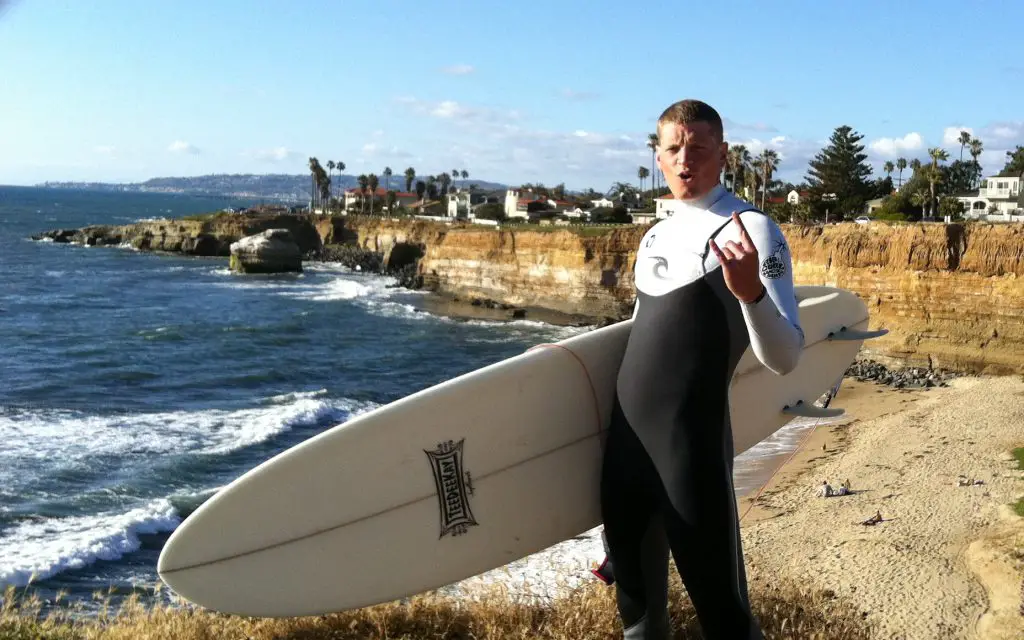
Surfing is serious here. Sunset Cliffs is a well-known surf spot with a dedicated local community. The breaks at Luscomb’s Point and the southern end of the park attract experienced surfers — if you’re a beginner, this is not the place to paddle out. Watch from the blufftop and appreciate the skill involved.
Water shoes for the tide pools and cave access. The rocks below the cliffs are covered in algae and are extremely slippery when wet. Regular sneakers work okay, but water shoes or shoes with actual grip are significantly better for the beach access points and tide pool scrambling.
No fires, no camping. It’s a city natural park — fires and overnight camping are not permitted anywhere in the park.
The Bottom Line
Sunset Cliffs is one of those places that seems almost too good to be true for San Diego. It’s free, it’s open all day, it’s got multiple completely different experiences packed into 68 acres, and it delivers one of the best sunsets in California on a regular basis. Whether you’re here for a 20-minute blufftop stroll before dinner, a low-tide scramble into the sea cave at Luscomb’s Point, a full hillside loop through the native sage scrub, or just the sunset — this place delivers.
Go on a weekday. Go in winter after a storm. Bring your camera and your tide chart. And stay for the blue hour.
Check out some more coastal walks here..