Not every great hike involves a mountain. Sometimes the best ones are the ones right at sea level — where the trail is the coastline, the views are wall-to-wall Pacific Ocean, and the wildlife is lounging on the rocks ten feet in front of you barking at absolutely nothing.
The La Jolla Beach Trail is exactly that kind of walk. It’s easy enough for kids, short enough to do before brunch, and packed with more things to see per mile than almost anywhere else in San Diego. We’re talking tide pools full of sea creatures, harbor seals napping at Children’s Pool, California sea lions stacked up on the rocks at La Jolla Cove, sandstone sea caves you can walk into, and some of the most dramatic coastal cliff scenery in Southern California.
And it’s all free. No permit, no parking pass required, no trailhead fee. Just show up and walk.
Here’s everything you need to know.
Table of Contents
 Trail Stats at a Glance
- Distance: ~2.3 miles out-and-back
- Elevation Gain: ~157 ft
- Difficulty: Easy
- Time: 45 minutes–1.5 hours (depending on how long you linger)
- Dogs: Allowed with time restrictions (before 9 AM and after 6 PM, April–Oct; before 9 AM and after 4 PM, Nov–March) — not allowed at Children’s Pool
- Parking: Free street parking on Coast Blvd (2–3 hour limit); paid lots nearby
- Entrance Fee: None — this is a public coastal trail
- Restrooms: Available at Ellen Browning Scripps Park near La Jolla Cove
Why This Walk Is Worth Your Time
La Jolla is one of those places San Diegans sometimes take for granted because it’s always been there. But walk this coastline — really walk it — and you’ll remember pretty quickly why people from all over the world make a point of coming here.
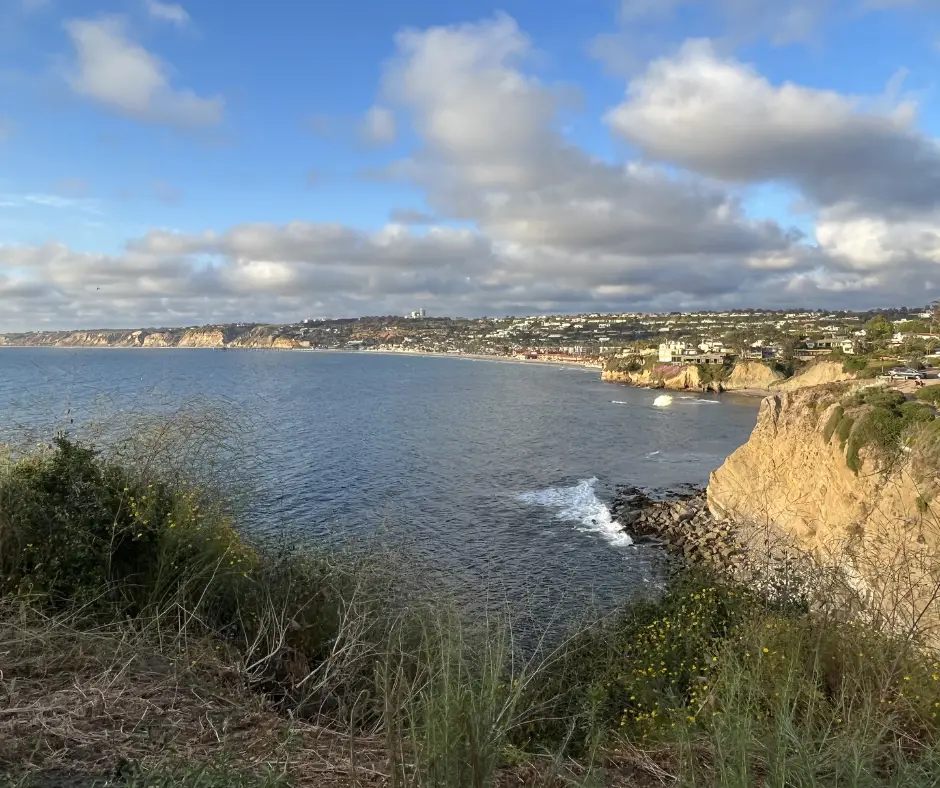
The stretch of coast from La Jolla Shores to Children’s Pool and La Jolla Cove packs in an absurd amount in a short distance. The cliffs are carved into wild shapes by centuries of wave action. The underwater world below — part of the protected La Jolla Underwater Park Ecological Reserve — draws divers, kayakers, and snorkelers year-round. And the wildlife is genuinely remarkable for a place that’s a 15-minute drive from downtown San Diego.
The tide pools here are some of the best accessible ones in the county. The seals at Children’s Pool are a legitimate San Diego institution. And then there’s the Sunny Jim Sea Cave — the only sea cave in California accessible by land, right off the main trail. You’re not going to run out of things to look at on this walk.
Walking the La Jolla Beach Trail: What You’ll See and Where
The Trailhead: Start at La Jolla Shores
The most popular starting point for the La Jolla Beach Trail is Kellogg Park at La Jolla Shores Beach — a wide, flat stretch of sand at the base of the La Jolla bluffs. Park here (more on parking below), get your bearings, and start heading south along the water.
The first stretch is pure beach walking — wide, sandy, and completely relaxed. Dolphins are regularly spotted offshore in this section, and sea birds work the surf line constantly. It’s a great warmup for what’s ahead. Keep walking south as the beach narrows and the cliffs begin rising to your left.
The La Jolla Swing (~0.4 miles)
One of the first landmarks you’ll hit heading south is the La Jolla Swing — a wooden swing hanging from the cliffs above the beach that’s become a bit of a local legend and an obligatory photo stop. It’s tucked right against the sandstone bluff and easy to miss if you’re not looking for it, so keep your eyes on the cliff face to the left as you walk. Swing on it. Take the photo. You’re welcome.
The beach gets a bit narrower and rockier past this point, which is your first hint that the coastal character is starting to shift from pure sandy beach into something more interesting.
The Cave Store and Sunny Jim Sea Cave (~0.7 miles)
As the beach gives way to rocks and the trail begins working its way up toward the blufftop, you’ll reach the Cave Store — a small shop sitting right on the cliff edge above the water. This is where things get genuinely cool.
Inside the Cave Store (small admission fee, usually a few dollars), a staircase leads 145 steps down through the sandstone cliff to Sunny Jim Sea Cave — the only sea cave on the California coast accessible by land. The cave itself is dramatic: you emerge from the darkness into a cathedral-like cavern open to the ocean, with waves surging in and echoing off the walls. It’s one of San Diego’s legitimately cool hidden gems and absolutely worth the small fee and the climb back up.
The cave was named by author L. Frank Baum — yes, the Wizard of Oz guy — who lived in La Jolla. The shape of the cave entrance reminded him of the cartoon character Sunny Jim. San Diego trivia doesn’t get much better than that.
There’s also a secret entrance to the cave from the beach side — a narrow crack in the sandstone cliff that you can squeeze through at low tide to access the cave from the water’s edge. It requires some scrambling and you will get wet, so save that one for a low-tide adventure day when you’re dressed for it.
Tide Pool Pro Tip: The difference between low tide and high tide at La Jolla is the difference between an incredible nature experience and wet shoes on slippery rocks with nothing to see. Check the tide chart before you go — you want low tide, ideally within an hour or two of the lowest point of the day. NOAA’s tide predictor and most surf forecast apps have La Jolla tide times. It takes 30 seconds to check and makes a huge difference.
The Blufftop Path and Tide Pools (~0.9 miles)
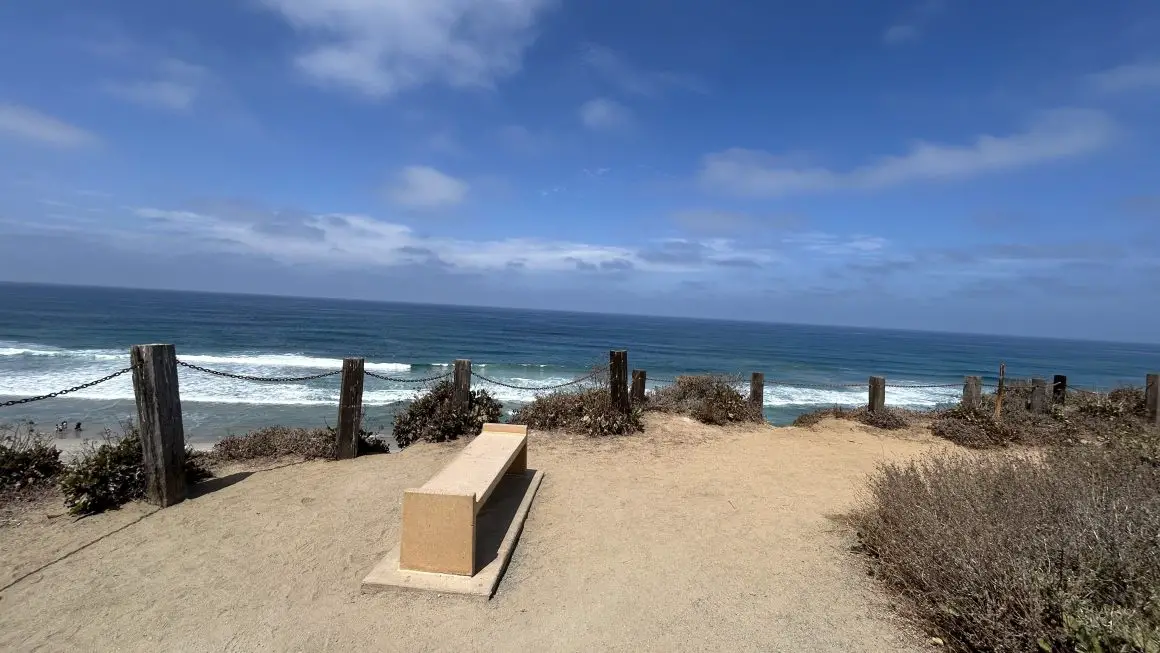
Past the Cave Store, the trail climbs up onto the blufftop coastal path — and this is where the scenery really opens up. You’re now walking along the top of the sandstone cliffs with sweeping views of the Pacific in every direction. The path is paved and well-maintained, lined with wind-shaped Monterey cypress trees and benches positioned at every overlook.
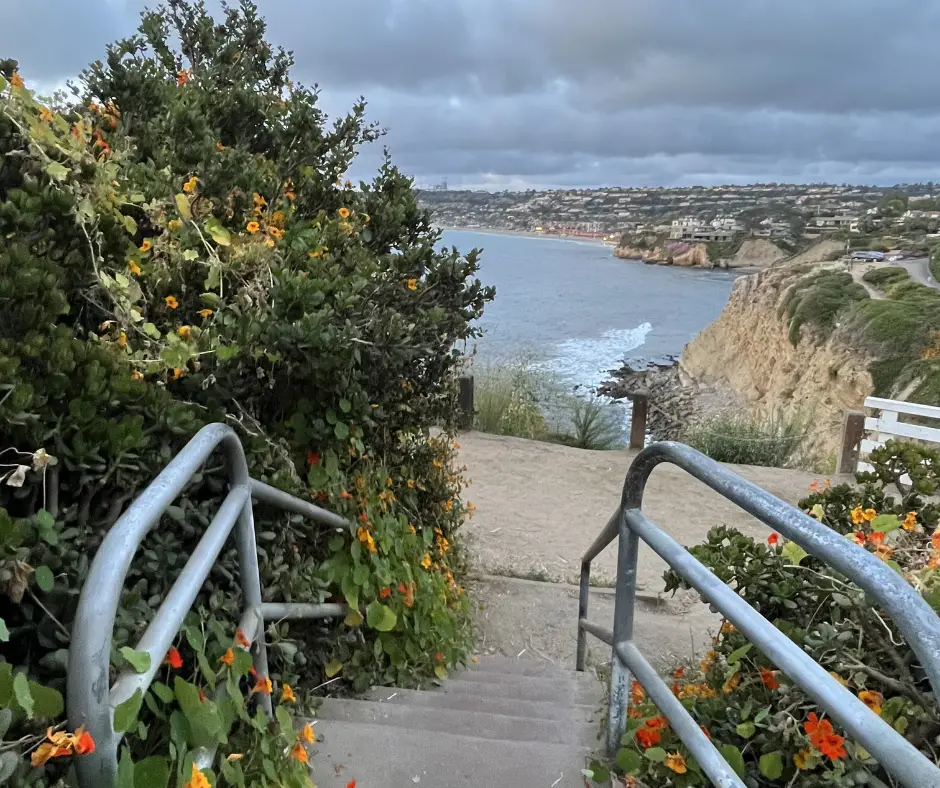
Below the blufftop to the west, the rocky shoreline is riddled with tide pools — and these are some of the best accessible ones in San Diego County. At low tide, the rocks come alive: sea anemones with their tentacles waving in the surge, hermit crabs on the move, small fish darting between pools, the occasional nudibranch (look it up — they’re absurdly beautiful), and all the other little creatures that call this marine protected area home.
Important: these tide pools are protected. Don’t collect anything — no shells, no rocks, no animals. Look, photograph, and leave everything exactly where you found it. These are part of the La Jolla Underwater Park Ecological Reserve and the rules are taken seriously.
La Jolla Cove and Ellen Browning Scripps Park (~1.1 miles)
Continuing along the blufftop path, you’ll arrive at Ellen Browning Scripps Park — a grassy, palm-lined park perched right above La Jolla Cove. This is one of the most beautiful spots in all of San Diego, and locals treat it like the gem it is: families picnicking, people watching the sunset, visitors from everywhere stopping to stare at the view. Pause here. It deserves it.
From the blufftop walkway, you’re looking straight down into La Jolla Cove — a sheltered turquoise bay carved out of the sandstone by centuries of wave action. The water is exceptionally clear (it’s a protected marine reserve), and on a calm day you can watch divers and snorkelers moving around below.
On the rocks at Point La Jolla just south of the cove, you’ll find the California sea lions — big, loud, charismatic animals that bark at each other, jostle for the best rock, and occasionally launch themselves into the water and back out again. They are genuinely entertaining. Stay on the path and keep your distance — some bluff areas are permanently closed to protect the animals. Worth noting: what most people call the “La Jolla Cove seals” are actually sea lions. The real harbor seals are at the next stop.
Children’s Pool and the Harbor Seals (~1.5 miles)
The trail wraps up at Children’s Pool Beach — and honestly, this might be the best stop of the whole walk. The pool was built in 1931 with a concrete breakwater designed to create a calm swimming spot for children. The harbor seals had other ideas. Over the decades they discovered it, claimed it, and it’s been theirs ever since.
From the seawall, you look straight down at the seals resting on the sand below — sleeping, wriggling around, nursing pups, slipping in and out of the water. On a good day there are dozens of them. Between December and May is pupping season, when seal pups are born right on the beach in front of you. If you time your visit during that window, it’s an experience that’s hard to beat anywhere in California.
From Children’s Pool, turn around and walk back to La Jolla Shores the way you came — or find a bench and linger for a while first. Honestly, why rush it.
Best Times to Hike La Jolla Beach Trail
Early morning is the sweet spot. Before 9 AM, parking is much easier to find, the trail is quieter, the light on the cliffs is golden, and the wildlife tends to be more active. If you’re doing this on a weekend, early morning isn’t just recommended — it’s basically required if you want a stress-free parking situation and breathing room on the trail.
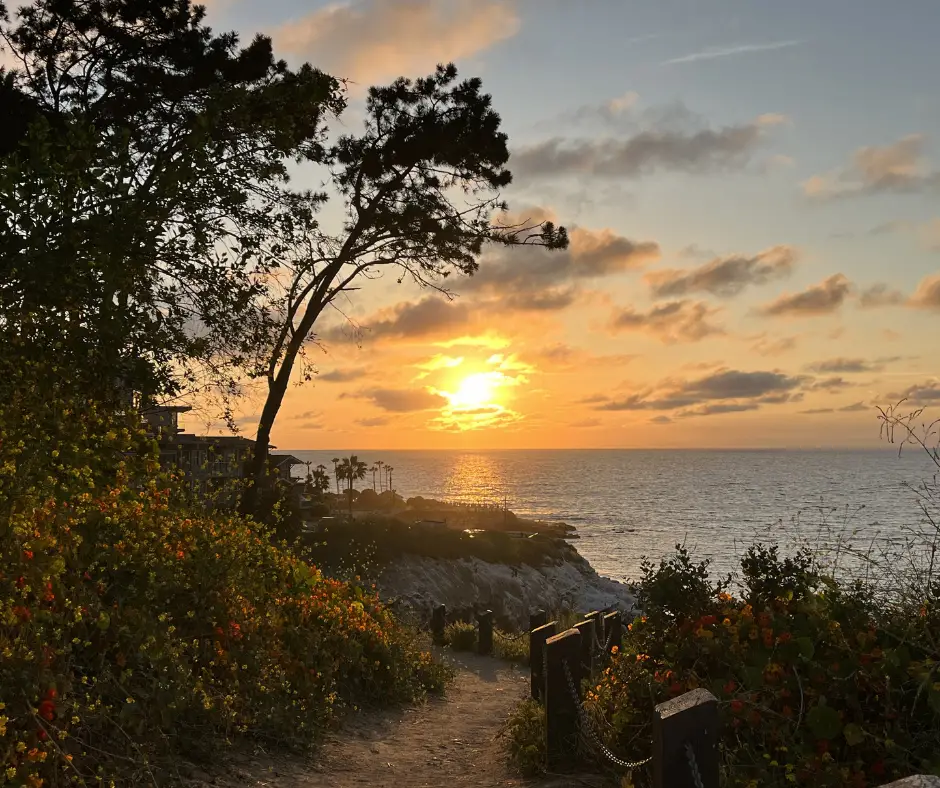
Sunset is spectacular from the blufftop at Scripps Park. If you’re willing to deal with afternoon parking chaos, the payoff of watching the sun go down over the Pacific from those cliffs is real. Park farther away and walk in — it’s worth it.
For tide pools specifically: time your visit for low tide. Check the day’s tide chart and try to arrive within a couple hours of the lowest point. A minus tide (when the water drops below mean sea level) reveals rock formations and marine life that most people never see.
For seals at Children’s Pool: they’re there year-round, all day. Peak viewing season for pups is December through May. Morning tends to have more animals on the beach before they head out to feed.
Weekdays over weekends — La Jolla is one of San Diego’s most visited neighborhoods and the Coast Blvd area gets genuinely packed on weekend afternoons. If you have flexibility, a weekday morning here is an entirely different experience from a Saturday at noon.
Parking: What You Need to Know
Parking is La Jolla’s one genuine inconvenience, and it’s worth planning around rather than hoping for the best.
La Jolla Shores Beach parking lot: If you’re starting at La Jolla Shores, there’s a free public parking lot at Kellogg Park right on the beach (Calle Frescota, just off Camino del Oro). It’s popular — arrive early on weekends. This lot is free and has no time limit, making it the best starting point for the full trail.
Coast Boulevard street parking: Running right along the blufftop near La Jolla Cove and Children’s Pool, Coast Blvd has free street parking with 2–3 hour time limits depending on which block you’re on. These spots are gold on weekends and go fast. Your best shot is arriving before 9 AM to snag a 3-hour spot near the Cave Store or Scripps Park — that gives you plenty of time for the whole walk with time to linger at the wildlife spots.
Paid parking garages: There are a couple of paid lots within walking distance of La Jolla Cove if you strike out on street parking. 875 Prospect Street (Ace Parking) is a walkable option to the Cove area. Expect to pay standard La Jolla rates — not cheap, but convenient when the streets are full.
The best parking strategy: Start at La Jolla Shores (free lot, no time limit), walk the trail south to Children’s Pool and back, and you’re done without ever stressing about a parking meter. If you want to start from the Cove end instead, set an alarm for early and aim for the Coast Blvd street spots before 9 AM.
A Few Things to Know Before You Go
Wear shoes you don’t mind getting wet. The tide pool sections involve walking on wet, algae-covered rocks. They will be slippery. Sturdy sandals or trail shoes are better than flip flops for the rocky sections, and water shoes are never a bad call if you plan to spend time in the pools.
Layers. It is almost always noticeably cooler in La Jolla than inland — sometimes 10+ degrees cooler. Even on a warm day, the coastal breeze on the blufftop can be real. A light jacket lives in my car permanently for this reason.
Don’t feed or approach the seals. The seals at Children’s Pool are wild, protected animals. It’s genuinely illegal to harass or approach them, and it causes real harm to the colony. Observe from the seawall, take great photos, and let them do their thing.
Bring a tide chart and binoculars if you have them — binoculars make the sea lion watching at Point La Jolla significantly better, and a tide chart makes the difference between a great tide pool visit and a mediocre one.
The walk can be extended. If 2.3 miles isn’t enough for you, head north from La Jolla Shores along the beach past Scripps Pier and continue up toward Black’s Beach. You can stretch this into a 5-mile beach walk at low tide. Going south from Children’s Pool, the coastal path continues toward Windansea Beach for another mile or so of beautiful cliff-side walking.
The Bottom Line
The La Jolla Beach Trail is the rare kind of hike that works for literally everyone. It’s easy enough to be a casual morning stroll and interesting enough to keep you engaged the whole time. First-time San Diego visitors do it, local families do it every few weeks, and longtime residents keep coming back for sunset walks and low-tide tide pool sessions.
It doesn’t ask much of you. Just show up, walk south along one of the most beautiful stretches of coastline in the country, and pay attention to what’s in the water.
Check out other beach hikes in San Diego.